

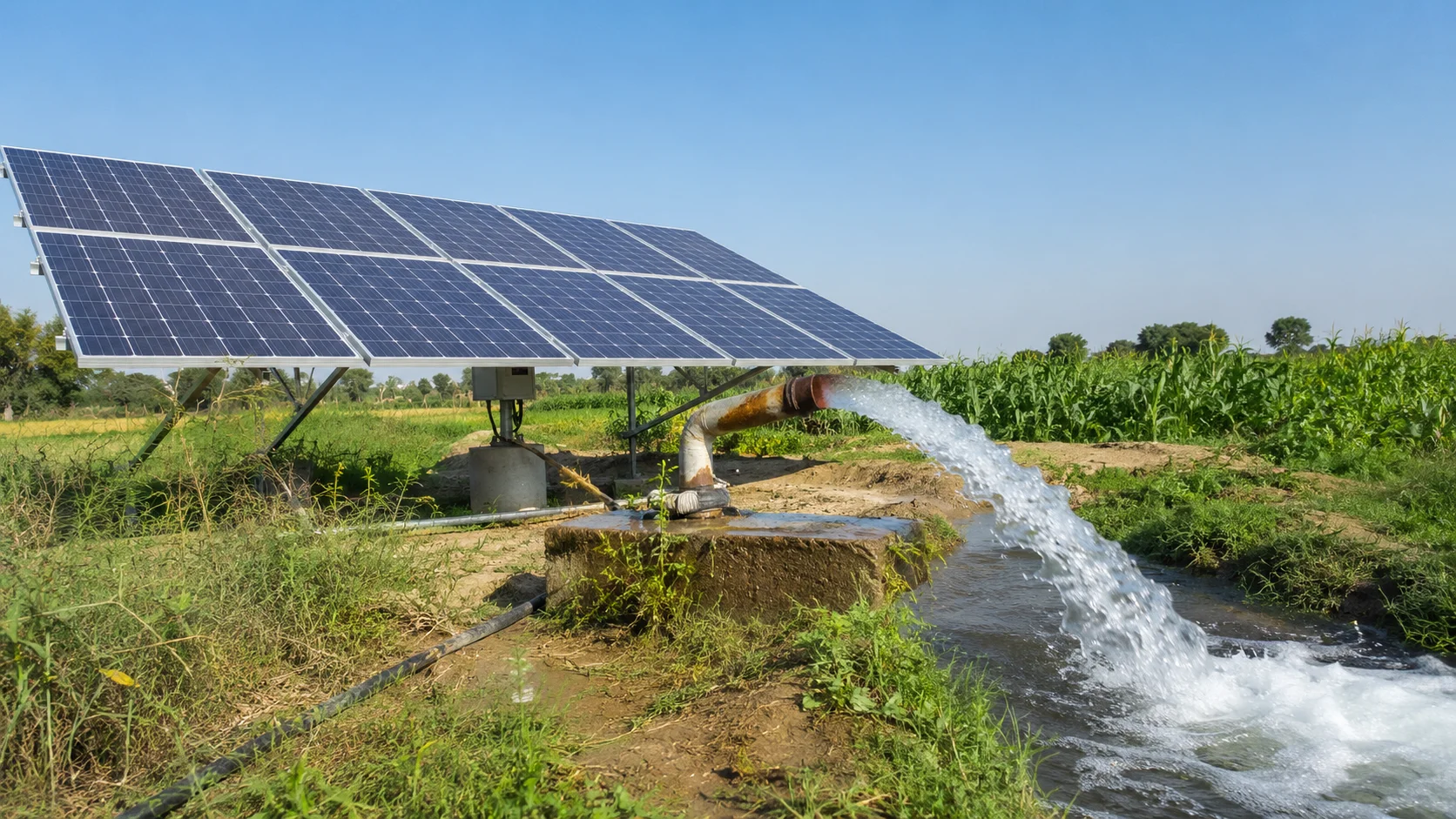
A solar irrigation pump is a water pumping system powered entirely by solar panels — no diesel, no grid electricity, no fuel bills. The panels generate DC electricity during daylight hours, which directly drives a pump (surface or submersible) to lift water from a well, borewell, pond, or canal into your irrigation system. In India, where diesel pump running costs can reach ₹800–1,200 per day and grid power for agriculture is unreliable in most states, solar irrigation pumps have become the most practical alternative for farms of 1 acre and above. Sound too good to be true? It isn't — but the sizing matters a lot.
This guide covers everything a farmer needs to know: types of solar pumps, how to size the system for your farm, real costs, PM KUSUM subsidy details, and the five questions our team at R-Solar gets asked on every site visit.
Surface Pump vs Submersible Solar Pump: Which One Do You Need?
The first decision is the pump type — and it depends entirely on your water source depth.
- Surface solar pump: Sits above ground; draws water from depths up to 7–8 metres (open wells, ponds, canals, tanks). Cheaper to install, easier to maintain. Best for farmers with open water sources.
- Submersible solar pump: Installed inside a borewell or deep well; handles depths from 15 to 200+ metres. The standard choice for most Indian agricultural borewells, where water tables have dropped to 20–50 metres in many districts of MP, Rajasthan and Maharashtra.
In our experience across 300+ solar pump installations in Madhya Pradesh, over 80% of agricultural clients need a submersible system — because their borewells are deeper than 15 metres. If you are unsure, a quick borewell depth measurement before purchase saves you from buying the wrong pump type entirely.
Solar Pump HP Sizing: How Much Power Does Your Farm Need?
HP (horsepower) determines how much water the pump can deliver per day. The sizing formula is simple: area × crop water requirement × safety margin. Here is a practical reference table for central Indian conditions (300+ sunny days/year, 8–9 peak sun hours/day):
| HP | Daily output (30m depth) | Suitable farm size | Typical crop |
|---|---|---|---|
| 1 HP | 40,000–50,000 L | 1–1.5 acres (drip) | Vegetables, soybean, wheat |
| 2 HP | 80,000–100,000 L | 2–3 acres (drip) | Cotton, maize, horticulture |
| 3 HP | 120,000–150,000 L | 3–5 acres (drip/sprinkler) | Banana, sugarcane, onion |
| 5 HP | 200,000–250,000 L | 5–10 acres (any method) | Large farms, multi-crop |
| 7.5–10 HP | 350,000–500,000 L | 10–25 acres | Commercial, community use |
Our recommendation: always size up by one HP class from the minimum. A 3 HP system for a 2-acre banana farm will serve you better than a 2 HP system struggling at peak summer demand — and the cost difference is typically ₹40,000–60,000, far less than one season of unmet water stress.
Solar Irrigation Pump Cost in India (2026)
The total installed cost of a solar pump system covers panels, pump, controller, mounting structure, and wiring. Prices have dropped 35% over the past five years — and are still falling. Current market benchmarks:
- 1 HP surface system: ₹1.5–2 lakh installed
- 2 HP submersible: ₹2–2.8 lakh installed
- 3 HP submersible: ₹2.5–3.5 lakh installed
- 5 HP submersible: ₹4–6 lakh installed
- 7.5 HP submersible: ₹6.5–9 lakh installed
For a farmer currently spending ₹600/day on diesel (common for a 3 HP diesel pump running 6 hours), the payback period on a ₹3 lakh solar system is under 2 years — even without any subsidy. With the PM KUSUM subsidy, payback drops to under 12 months.
PM KUSUM Scheme: The 60% Subsidy You Should Know About
PM KUSUM (Pradhan Mantri Kisan Urja Suraksha evam Uttham Mahabhiyan) Component B provides standalone solar pumps of 2 HP to 10 HP to individual farmers. The subsidy structure:
- Central government: 30% of benchmark cost
- State government: 30% of benchmark cost (varies by state — MP, Rajasthan and Maharashtra offer the full 30%)
- Farmer's share: 40% — which can be financed via KCC or bank loan
The application process varies by state but generally involves: (1) registration on the state agriculture or energy department portal, (2) land ownership documents, (3) borewell or water source verification, and (4) bank account for subsidy disbursement. Processing times range from 3 to 9 months depending on the state's queue. In Madhya Pradesh, applications go through the MPUVN portal.
One thing we tell every farmer who asks: apply first, then wait. Don't hold off on solar because you're waiting for subsidy approval — if you have an urgent irrigation need, buy now and apply for the subsidy simultaneously. The subsidy can often be claimed retroactively within 6 months of installation.
What R-Solar Has Learned from 300+ Agri Installations in MP
We have installed solar water pump systems across Barwani, Khargone, Sendhwa, and surrounding districts of Madhya Pradesh — mostly for smallholder farmers with 2–10 acres under cultivation. Here is what the data from those installs tells us that you won't find in a brochure:
- Borewell depth matters more than HP. A farmer in Sendhwa with a 120-foot borewell and a 3 HP pump got less water than his neighbour with a 60-foot borewell and a 2 HP pump. Head pressure (depth) is a bigger constraint than motor size at medium depths.
- East-facing panels outperform west-facing in morning-peak irrigation schedules. Most farmers in our region water in the early morning. A 10–15° east tilt from due south can add 8–12% effective morning output.
- The cheapest inverter is the most expensive decision. We have seen three no-name MPPT controllers fail within 18 months. A quality MPPT controller costs ₹8,000–15,000 more than a no-brand alternative — and saves two replacements and one crop cycle of downtime.
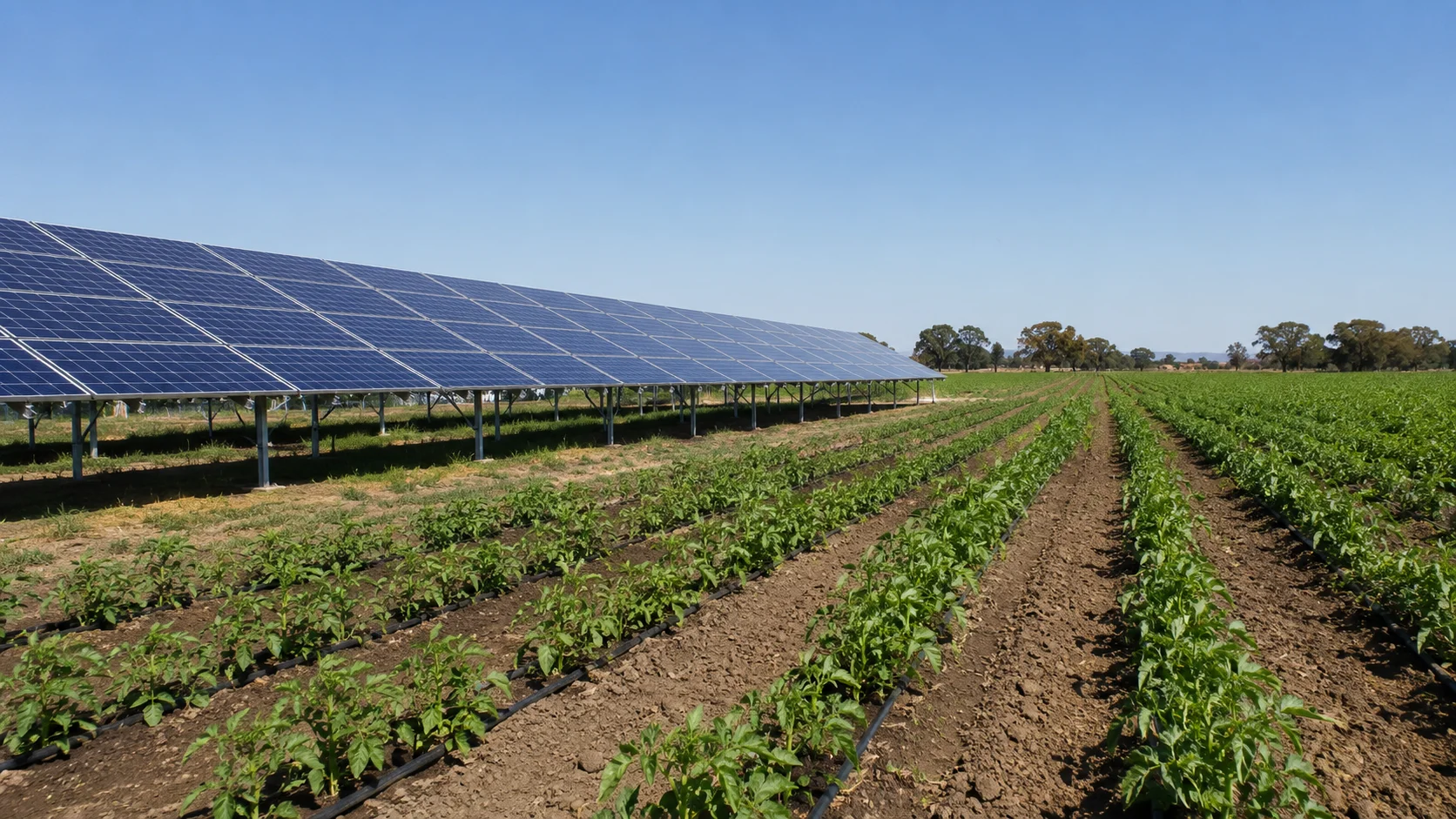
- Drip + solar is a compounding investment. Farmers who combine a solar pump with drip irrigation reduce their water requirement by 40–50%, effectively doubling the area their solar system can serve — or halving the HP they need to buy.
If you're in MP and want a site assessment before committing to a system, R-Solar offers free pre-installation borewell depth checks and solar resource assessments for farms in our service area.
Solar Pump Maintenance: What to Expect
Solar irrigation pumps have no moving parts in the electrical system — panels and controllers require almost no maintenance. The pump itself is the only mechanical component. Maintenance checklist:
- Panels: Clean monthly with water (a wet cloth is enough). Dust accumulation reduces output by 15–25% in the pre-monsoon season in central India. Don't use soap — it leaves residue.
- Submersible pump: Service annually. Check impeller and motor seals. A well-maintained submersible pump lasts 8–12 years.
- MPPT controller: Check connections and firmware every 6 months. Surge protectors should be replaced every 3 years in lightning-prone areas.
- Structure and mounting: Inspect for corrosion and fastener tightness after every monsoon season.
The honest answer on lifespan: quality solar panels carry a 25-year performance warranty (80% output at year 25). The pump is the weakest link at 8–12 years. Budget ₹15,000–25,000 for a pump replacement at year 10 — it's still far cheaper than 10 years of diesel.
Frequently Asked Questions
How much does a solar irrigation pump cost in India?
A solar irrigation pump system in India costs between ₹1.5 lakh and ₹6 lakh installed, depending on HP capacity. Under the PM KUSUM scheme, the central and state governments together subsidise 60% — a farmer's actual outlay on a 5 HP system can be as low as ₹1.6–2.4 lakh.
What HP solar pump do I need for 1 acre?
For 1 acre under drip irrigation, a 1 HP solar pump is generally sufficient — delivering 40,000–50,000 litres per day from 30-foot depth. For flood or furrow irrigation, or water-intensive crops like banana and sugarcane, use a 2–3 HP pump.
What is the PM KUSUM scheme for solar pumps?
PM KUSUM Component B offers individual farmers a standalone solar water pump (2–10 HP) with 60% subsidy — 30% from the central government and 30% from the state government. The farmer pays 40%, which can also be financed via bank loan. Apply through your state agriculture or energy department portal.
Surface pump or submersible pump — which is better for agriculture?
Use a surface solar pump if your water source is less than 7–8 metres deep (open well, pond). Use a submersible pump if your borewell is deeper than 8 metres — which covers most agricultural borewells in India. R-Solar recommends submersible systems for 80% of our agricultural clients in Madhya Pradesh.
Do solar irrigation pumps work on cloudy days?
Yes, at reduced output. On a 30–50% cloud cover day, the pump runs at 30–50% of rated capacity. In central India (300+ sunny days/year), cloud downtime is minimal. For fixed-schedule irrigation needs, a small battery buffer or conventional backup pump is recommended.