

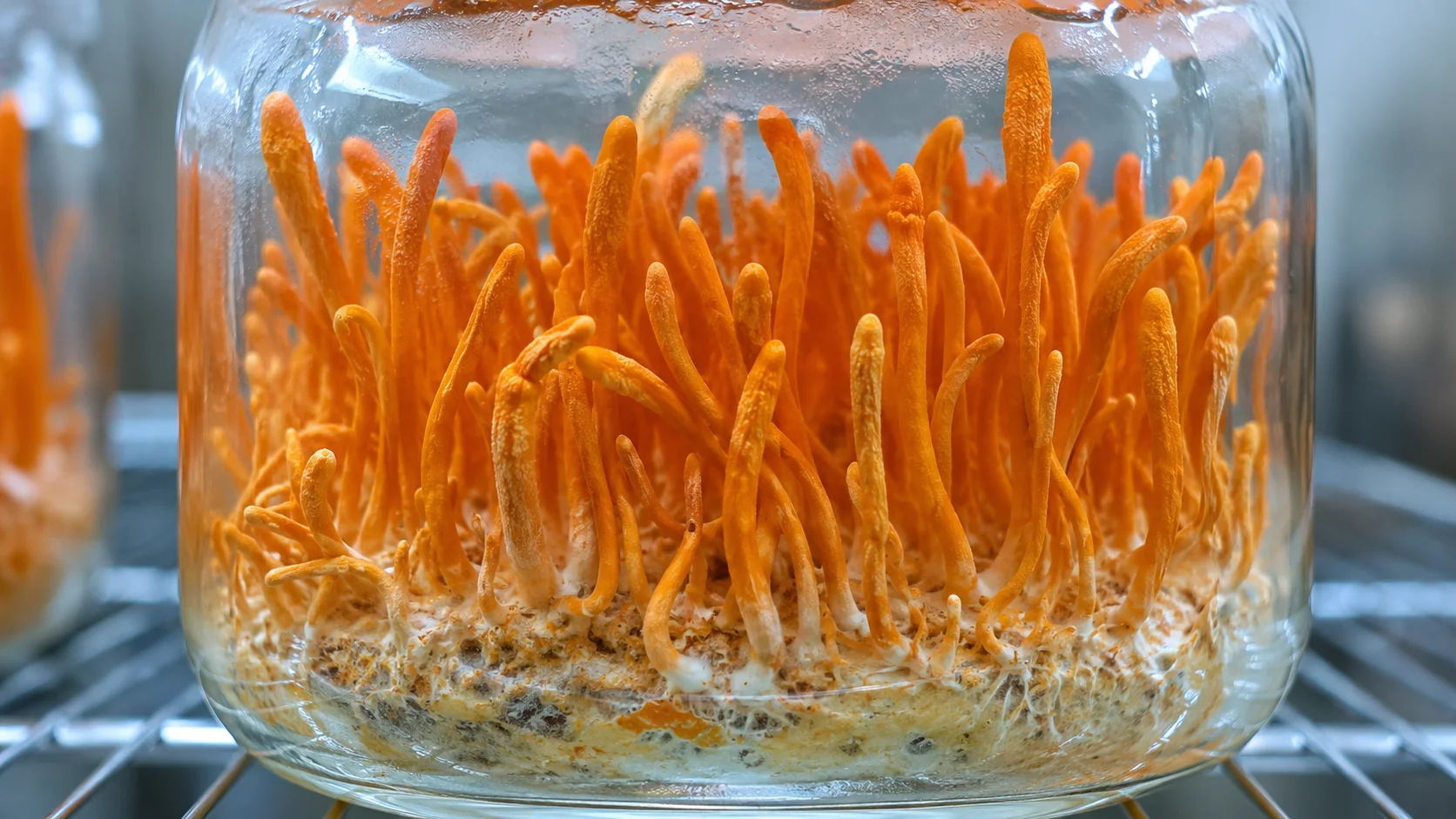
Keeda jadi — literally "insect herb" in Hindi — is the common Indian name for Cordyceps, a fungus that has been used in Tibetan and Chinese medicine for over a thousand years and has entered mainstream sports nutrition in the last decade. Wild keeda jadi (Cordyceps sinensis) is harvested by hand from Himalayan altitudes above 3,500 metres and costs ₹5–15 lakh per kg. Lab-grown keeda jadi (Cordyceps militaris) is cultivated on grain substrates at any altitude, contains comparable or higher levels of the key active compound cordycepin, and costs a fraction of the price. Most keeda jadi products sold in India today are Cordyceps militaris — which is perfectly fine, but knowing the difference matters when you're comparing prices and claims.
This guide covers what keeda jadi actually is, current prices in India, the evidence on benefits, how to tell genuine product from adulterated, and what Synervion's lab-grown production in Madhya Pradesh looks like from the inside.
What Is Keeda Jadi? Wild vs Lab-Grown
The name covers two distinct species with shared bioactive properties:
| Property | Wild (C. sinensis) | Lab-grown (C. militaris) |
|---|---|---|
| Origin | Himalayan highlands, 3,500–5,000m | Controlled lab, any location |
| Harvest method | Hand-picked from soil, seasonal | Cultivated on grain substrate, year-round |
| Cordycepin content | 0.1–0.3% | 0.5–1.5% (fruiting body); up to 40% (extract) |
| Price per kg (India) | ₹5–15 lakh/kg | ₹3,000–8,000/kg (dried); ₹15,000–40,000/kg (extract) |
| Availability | Scarce, heavily regulated | 365-day availability from certified labs |
| Use in supplements | Rare — mostly luxury TCM products | Standard in sports nutrition globally |
Our view at Synervion: for any supplement application — pre-workout, endurance, energy, recovery — lab-grown Cordyceps militaris is the better choice. Not because wild sinensis is inferior, but because the standardised cordycepin content of a quality C. militaris extract is more predictable and typically higher than wild-harvested product of the same weight. Wild sinensis is a prestige ingredient with cultural weight; C. militaris is the ingredient that actually delivers consistent results in the dosage ranges that human trials have studied.
Keeda Jadi Price Per Kg in India (2026)
The price range is wide because multiple very different products get sold under the same "keeda jadi" name:
- Wild Cordyceps sinensis (genuine Himalayan keeda jadi): ₹5–15 lakh/kg depending on grade. The highest grades — large, intact, golden-coloured — command premium prices from TCM practitioners and high-end supplement brands. Anything claiming to be genuine wild sinensis at under ₹50,000/kg should be verified with documentation.
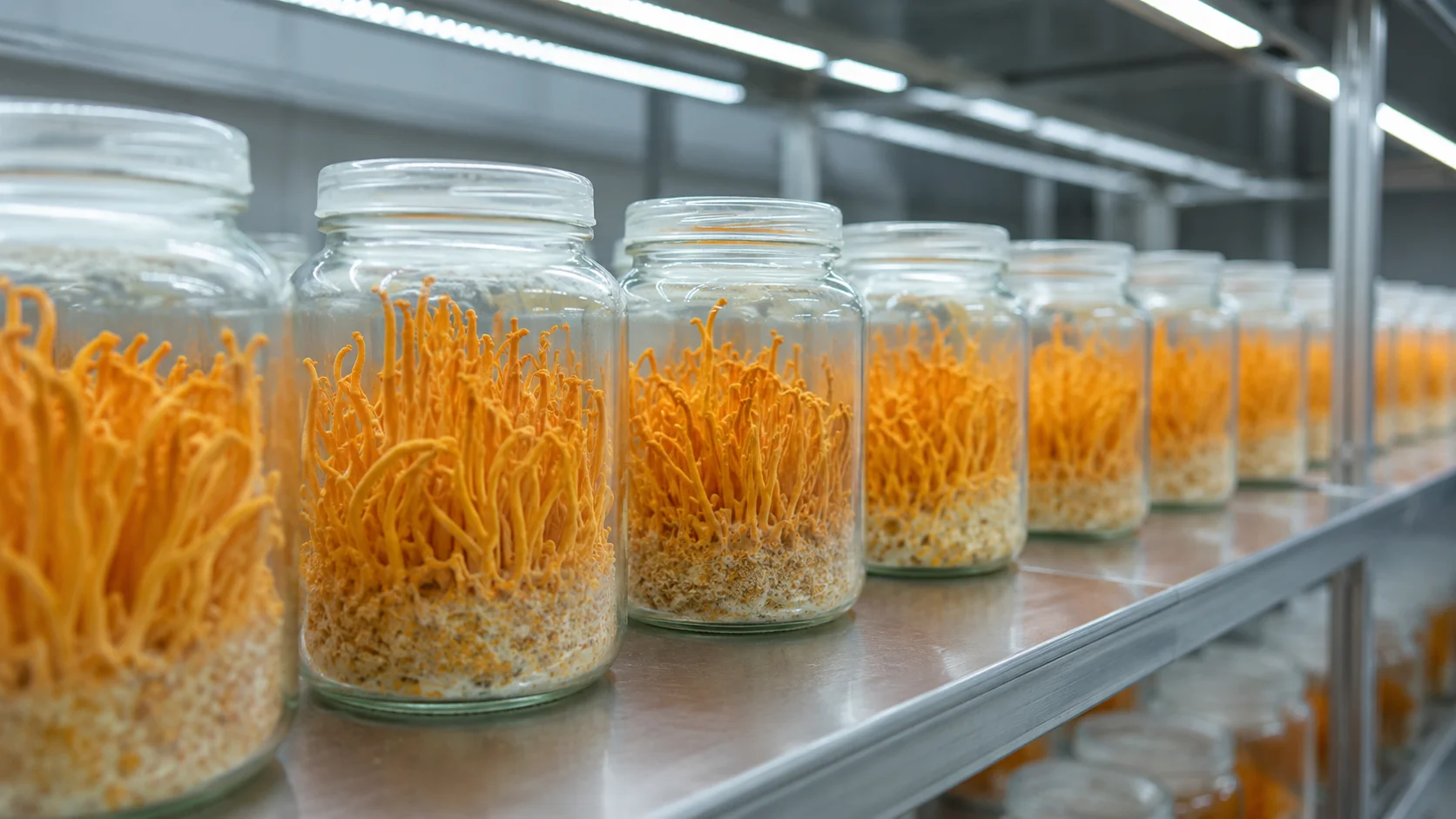
- Lab-grown C. militaris dried fruiting bodies: ₹3,000–8,000/kg. This is the standard ingredient for India-produced nutraceuticals. A reputable Indian lab like Synervion produces these at 99% purity with batch-level CoA (Certificate of Analysis).
- C. militaris standardised extract (20% cordycepin): ₹15,000–25,000/kg. The form used in capsules, powders, and functional food products.
- C. militaris high-potency extract (40% cordycepin): ₹30,000–40,000/kg. Research-grade extract, used in clinical formulations and premium sports nutrition.
If you're being quoted ₹500–2,000/kg for "Himalayan keeda jadi" on e-commerce platforms, you're looking at either adulterated product, very low-grade C. militaris mycelium (not fruiting bodies), or mislabelled product entirely. The pertinent question when buying any keeda jadi product isn't just the price — it's whether the seller can produce a Certificate of Analysis showing cordycepin content.
Current lab-grown cordyceps prices: Synervion — Farmkart Group's biotech company and India's lab-grown Cordyceps militaris manufacturer — publishes an up-to-date price breakdown. See the full keeda jadi price guide on synervion.com for wild vs lab-grown pricing per gram and per kg.
What Does the Science Say About Keeda Jadi Benefits?
The most robust evidence concentrates in three areas:
Aerobic Performance and VO₂ Max
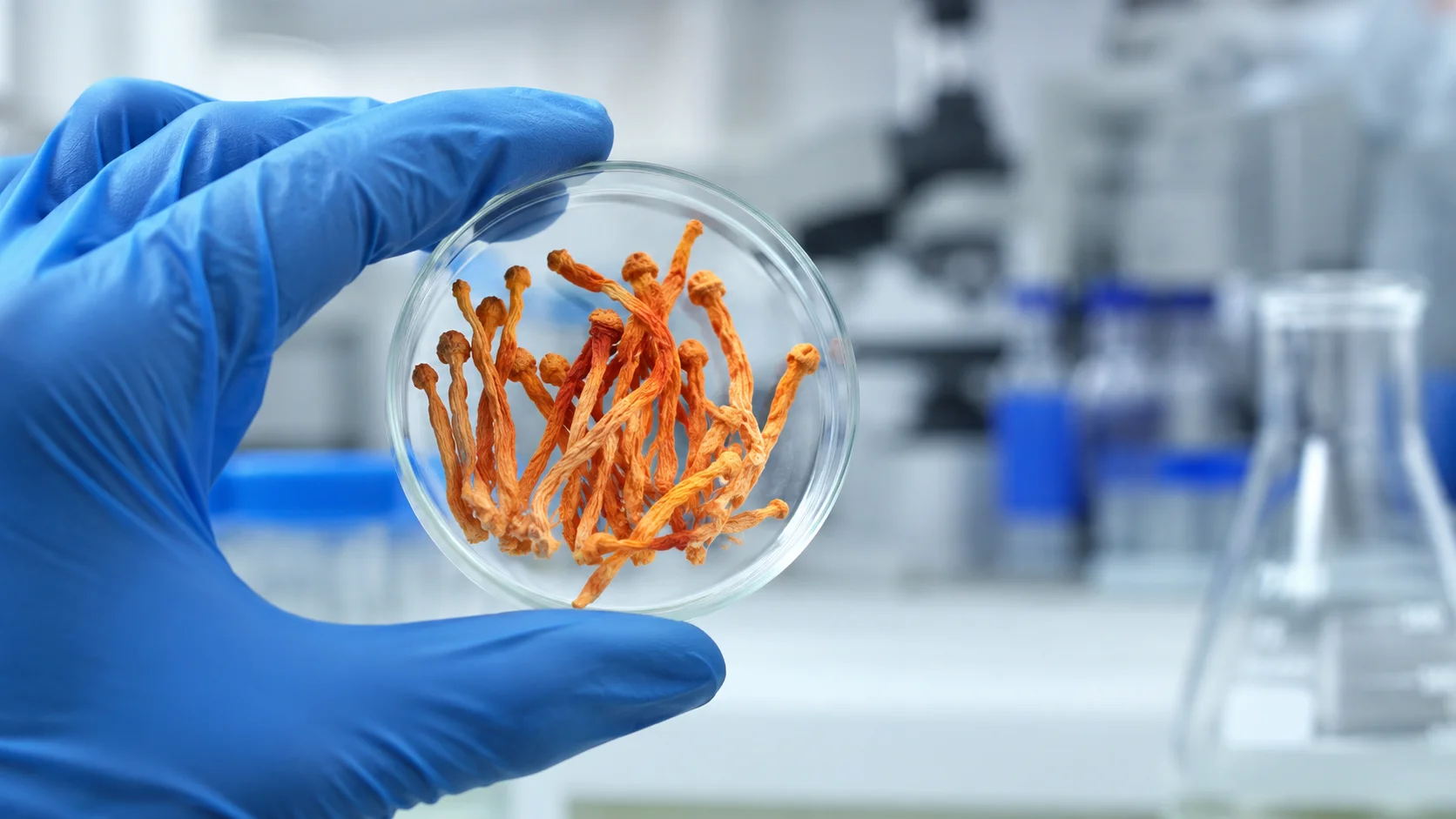
A 2016 randomised controlled trial (Hirsch et al.) found that Cordyceps militaris supplementation at 4g/day for 3 weeks produced an 11% increase in VO₂ max in healthy adults — a meaningful improvement in aerobic capacity. A 2020 follow-up study at 1g/day showed a 7% improvement. Both used standardised C. militaris extract, not wild sinensis. These are the most-cited human trials supporting Cordyceps use in sports nutrition, and they're why it has entered the mainstream pre-workout and endurance supplement market.
Energy and Anti-Fatigue
Cordycepin — the primary active compound — is a structural analogue of adenosine, a key molecule in ATP (cellular energy) production. Animal and in-vitro studies show cordycepin increases ATP synthesis and reduces markers of oxidative stress under physical load. Human trial evidence for pure anti-fatigue effects (separate from VO₂ max) is thinner but directionally consistent: subjects report lower perceived exertion at equivalent workloads after 3–4 weeks of supplementation.
Immune Modulation
Cordyceps contains beta-glucans and polysaccharides with demonstrated immunomodulatory activity in cell studies and animal models. The mechanism — activation of macrophages and NK cells — is similar to other beta-glucan-rich fungi (reishi, lion's mane). Human trial data is limited, but the ingredient is used in traditional medicine across East and Southeast Asia as a general immune tonic, and there's enough mechanistic rationale to justify its inclusion in immunity-focused formulations.
What the science does not support (yet): the libido and testosterone claims popular in Indian social media marketing. The traditional "Himalayan Viagra" label comes from Tibetan folk medicine and a single low-quality animal study. No peer-reviewed human trial has demonstrated Cordyceps-driven testosterone increases at supplement dosages. We don't include these claims in Synervion's product documentation, and in our experience, buyers who are sourcing for serious supplement formulations don't ask for them anyway.
How Synervion Produces Lab-Grown Keeda Jadi in India
Synervion is Farmkart Group's Cordyceps militaris production and B2B supply division, operating from a controlled cultivation facility in Madhya Pradesh. The production process is worth explaining because it's where quality differences in lab-grown keeda jadi are determined:
- Substrate preparation. C. militaris fruiting bodies grow on a sterilised grain substrate (typically brown rice or silkworm pupae in East Asian production; Synervion uses a proprietary grain blend optimised for Indian climate conditions). The substrate composition directly affects the final beta-glucan and cordycepin content of the fruiting body.
- Inoculation with certified mycelium culture. The strain matters enormously. Synervion maintains a curated library of C. militaris strains selected for high cordycepin yield and fruiting body development. A low-quality strain on the same substrate produces 40–60% lower cordycepin content.
- Climate-controlled cultivation. C. militaris is sensitive to temperature, humidity, CO₂ levels, and light spectrum. Our facility maintains these parameters within tight tolerances across all grow cycles — this is what "99% purity" means in practice: batch-to-batch consistency, not just a single high-reading.
- Harvest and processing. Fruiting bodies are harvested at peak maturity (when cordycepin content is highest), then dried at low temperature to preserve bioactive compounds. Extract production involves hot-water or ethanol extraction, concentration, and spray-drying.
- Batch testing. Every batch receives a Certificate of Analysis from a NABL-accredited third-party lab testing cordycepin content, heavy metals (arsenic, lead, cadmium, mercury), microbial load, and moisture. The CoA ships with every B2B order.
When a customer in the supplement or functional food industry asks us "why Synervion over imported Chinese extract?" — the honest answer is: CoA traceability to Indian soil, faster logistics, no customs uncertainty, and a direct relationship with the production team if there's ever a formulation question. Sound familiar to how agripreneurs think about supply chain reliability? It should — the principle is identical.
How to Identify Genuine Keeda Jadi / Cordyceps
The Indian keeda jadi market has an adulteration problem. Here are the practical checks:
- Ask for a CoA. Any legitimate supplier of standardised Cordyceps extract will have a Certificate of Analysis from a third-party lab showing cordycepin content (%, not just "present"), heavy metals, and microbial limits. No CoA = walk away.
- Check what species is declared. C. militaris and C. sinensis are both legitimate, but they're different and should be labelled correctly. "Himalayan Cordyceps" without species declaration is a red flag.
- Colour of dried fruiting bodies. Genuine C. militaris fruiting bodies are bright orange-gold. Pale, brown, or greyish product is either low-grade, adulterated, or over-processed.
- Price as a filter. Genuine C. militaris dried fruiting bodies at ₹500/kg are not possible at commercial scale from a legitimate lab. The minimum raw material cost alone rules it out. If the price seems too good to be true in the keeda jadi market, it is.
- Mycelium vs fruiting body. Many lower-cost products use C. militaris mycelium biomass (the root structure grown on grain), not the fruiting body. Mycelium products often contain significant grain filler and lower cordycepin. A legitimate extract product should specify "fruiting body" and show the cordycepin percentage on the CoA.
Who Buys Keeda Jadi in India — and For What?
The Indian keeda jadi market breaks into three distinct buyer segments, each with different quality requirements:
- Direct consumers (B2C): Athletes, fitness enthusiasts, and biohackers buying capsules or powder for personal use. Typically looking for 500mg–1g per serving of standardised extract in a convenient format. This segment is growing fast — India's sports nutrition market was valued at ₹3,800 crore in 2024 and is growing at 12–15% annually.
- Nutraceutical brands (B2B): Supplement companies that buy bulk Cordyceps extract and encapsulate or formulate it under their own brand. This is Synervion's primary market — white-label, co-branding, and custom formulation for brands that want an Indian-sourced, batch-tested ingredient.
- Functional food and beverage manufacturers: A newer and faster-growing segment adding Cordyceps to protein bars, energy drinks, and functional beverages. Requires water-soluble extract forms and lower heavy-metal thresholds than capsule products.
If you're sourcing keeda jadi for any of these use cases, Synervion's B2B supply covers all three: dried fruiting bodies, standardised extract (20% and 40% cordycepin), and custom extraction for specific formulation needs.
Frequently Asked Questions
What is keeda jadi?
Keeda jadi — "insect herb" in Hindi — is the Indian name for Cordyceps, a medicinal fungus used in Himalayan and Chinese traditional medicine for over a thousand years. Wild keeda jadi (Cordyceps sinensis) grows on caterpillar larvae above 3,500 m in the Himalayas and sells for ₹5–15 lakh per kg. Lab-grown keeda jadi (Cordyceps militaris) delivers comparable active compounds (cordycepin) at ₹25–100 per gram.
What is the price of keeda jadi per kg in India?
Wild Cordyceps sinensis costs ₹5–15 lakh/kg. Lab-grown Cordyceps militaris dried fruiting bodies cost ₹3,000–8,000/kg; standardised extract (20–40% cordycepin) costs ₹15,000–40,000/kg. Products sold under ₹2,000/kg as "Himalayan keeda jadi" are almost always C. militaris or adulterated product — not wild sinensis.
What are the benefits of keeda jadi?
The strongest human trial evidence supports: 7–11% improvement in VO₂ max (aerobic capacity) at 1–4g/day over 3 weeks; reduced perceived exertion during sustained exercise; and immunomodulatory activity via beta-glucans. Traditional uses also include energy, libido, and kidney support, though clinical evidence for these is limited.
Is lab-grown Cordyceps militaris as effective as wild keeda jadi?
For standardised supplement applications, yes — and often more so. Lab-grown C. militaris contains 3–5× higher cordycepin than wild C. sinensis by weight. The main difference is secondary metabolite complexity in wild product, whose individual effects are not yet well characterised. For athletic performance and energy applications, C. militaris is the evidence-backed choice.
How do you identify genuine keeda jadi?
Ask for a Certificate of Analysis (CoA) from a third-party NABL-accredited lab showing cordycepin content percentage, heavy metals, and microbial limits. Genuine C. militaris fruiting bodies are bright orange-gold. No CoA, no purchase.