

What Is Brain Gain in Agriculture?
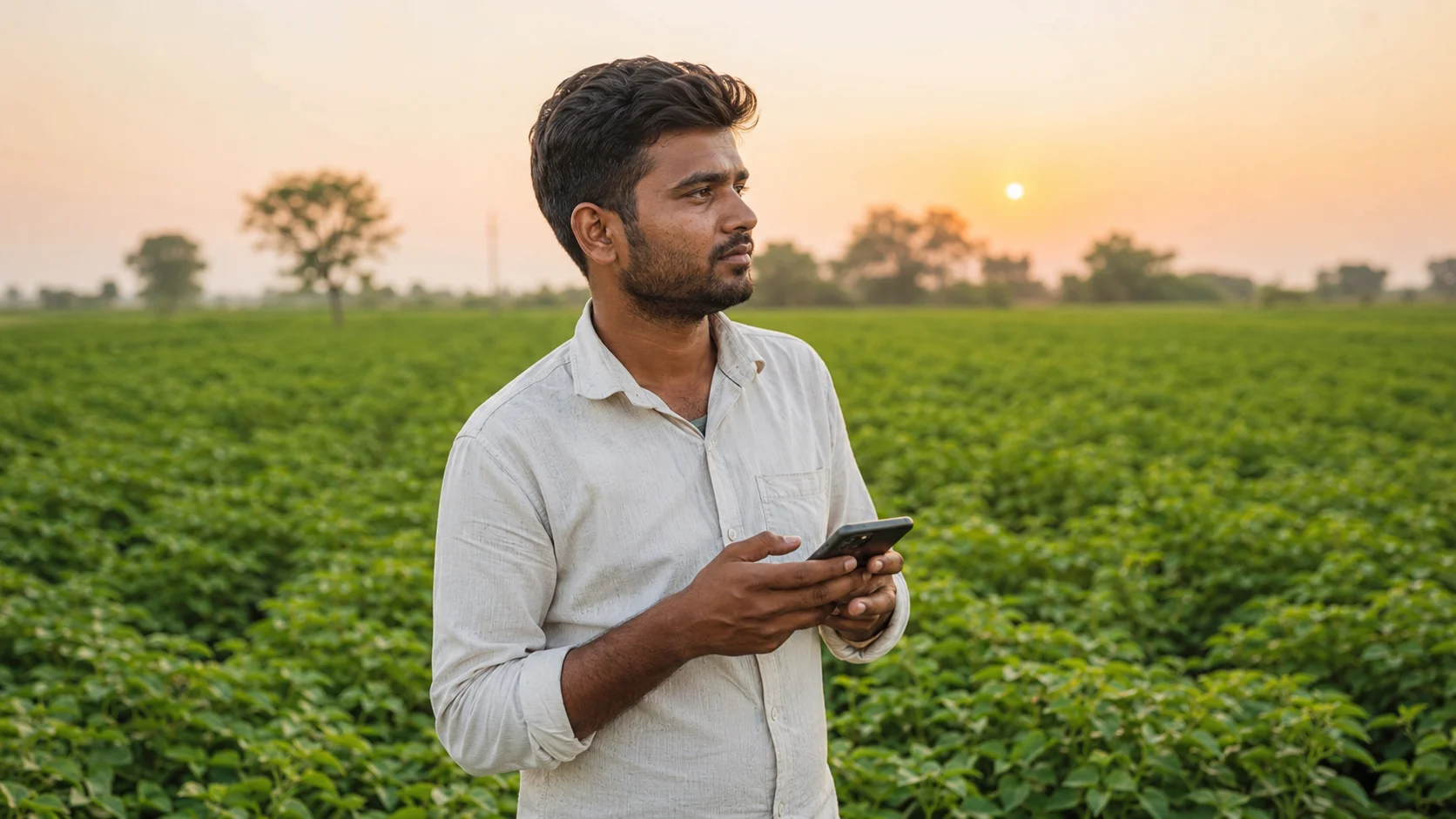
Brain gain in Indian agriculture is the return of educated youth, entrepreneurs, and urban professionals to rural farming — bringing technology, capital, and fresh thinking that traditional agriculture has long been missing. Where brain drain emptied villages of their brightest minds for decades, brain gain is running the reverse: people choosing farming not out of necessity, but because they see it as a high-potential, high-purpose sector worth building in.
It is well-known that the world is going through the largest internal migration in human history. People from rural areas are moving to the cities and urbanisation is at its peak. In India, there are about 300 million internal migrants who have moved to the urban areas in search of jobs. Most of them come from agricultural families. This exodus also brings into question the viability of farming as a profitable occupation: is there a silver lining that signals the reversal of this brain drain?

Who Is Returning to Indian Farms — and Why?
Yes, there is. We are now seeing an increasing number of urban middle-class people with non-farming backgrounds moving to the villages. The demographic is usually in their 20s and early 30s, tend to be well-educated and filled with the strong desire to make a difference.
But what attracts these people to give up their steady paychecks, life in rural areas and pursue a strenuous life? The dissatisfaction of the corporate lifestyle. They choose to pursue agricultural activities because the occupation is not only immensely satisfying but noble for the society too. Additionally, cultivating the land together helps the family to bond. Instead of the husband and wife commuting separately to their respective offices, the whole family can pitch in and contribute to every stage within farming cycle. This is an insurance against the disconnected lifestyle we are seeing these days in the cities.
It turns out that in the process of following their passion, they also serve as agents of change in the local communities. They serve as role models of what could be achieved with the existing resources. Let us see a few examples of these youngsters in action.
Sankalp Sharma, an engineer and an MBA from Madhya Pradesh, initially joined a high-profile banking job like his peers. Later, he realized that his plush corporate job did not bring him happiness despite a good paycheck. So, he returned to his ancestral village to give something back to the society and started farming on a 10-acre plot of land with his father. His academic background gave him a fresh perspective on dealing with common agricultural issues. He went beyond just figuring out ways to increase the productivity of the land: he methodically scrutinized each stage of the farming cycle using his business acumen.
He started by analyzing the input and output costs and realized that the lack of bargaining power forces the common farmer to buy seeds, fertilizers, and pesticides at retail prices and sell his produce at wholesale prices. So, he figured out a way to reduce the input costs using a technique called 'Natural Farming' that eliminates usage of chemicals. He is also setting up a marketing channel that would allow neighboring farmers to sell the crops at a higher price directly in the cities. This will reduce the significant price difference commonly seen between what the farmer sells and what the urban customer pays. He actively encourages the next generation of rural youngsters to continue their ancestral livelihood.
Karthikeyan, an MBA graduate from Tamil Nadu, gave up a promising corporate career and decided to pursue farming. He researched on precision farming and decided to apply those techniques to his crops. He wanted to bring a fresh perspective and promote usage of appropriate technology to maximize the yield.
Karthikeyan zoned in on Drip fertigation which involves applying a targeted amount of Nitrogen, Phosphorous, and Potassium directly to the root area as a liquid solution. This reduces the overall water requirement and also conserves the soil's nutrients from getting washed away. His single acre yields 12 lakhs per year and he is enthusiastic about promoting the use of micro irrigation tubes to the rest of the farming community.
What Brain Gain Brings to Indian Farming
The returning cohort doesn't just bring enthusiasm. They bring capital, market access, and systems thinking that most smallholder farming communities have been structurally excluded from:
- Capital and credit awareness. Urban professionals returning to farms are more likely to access formal credit (Kisan Credit Card, NABARD loans, government scheme subsidies) than first-generation farmers who rely on local moneylenders at 24–36% interest.
- Market networks. An engineer-turned-farmer with a professional network can reach urban bulk buyers, restaurants, and export channels that a traditional farmer never could. Direct-to-market channels typically deliver 2–3× the mandi price for premium produce.
- Technology adoption rate. In Farmkart's field research across Madhya Pradesh, farmers under 35 with urban backgrounds adopted soil-testing, drip irrigation, and agri-commerce platforms 4× faster than the average across the same districts.
- Risk appetite for diversification. Brain-gain farmers are more likely to trial new crops, allied activities (poultry, fisheries, vermicompost), and value-addition models — the exact moves that convert subsistence agriculture into a sustainable enterprise.
The Barriers Brain-Gain Farmers Actually Face
The picture isn't uniformly optimistic. Brain-gain farmers face structural barriers that urban professional experience doesn't prepare them for:
- Land title complexity. Family land is often fragmented, jointly owned, or without clear title — making it difficult to mortgage for formal credit or invest in permanent infrastructure like drip systems.
- Local market resistance. Commission agents, input dealers, and informal credit networks don't welcome disintermediation. Brain-gain farmers who try to bypass them often face informal pressure.
- Knowledge gaps in crop science. An MBA degree doesn't translate to knowing which rootstock resists Fusarium wilt, or when to apply the second split of potassium in a banana crop. Access to quality agronomy advice — through platforms like Farmkart or local KVKs — is the bridge.
- Social isolation. Returning to a village after urban life involves a social recalibration that few guides cover. Communities forming around FPOs and agritech platforms serve as peer-support networks as much as business partnerships.
These barriers are real but not insurmountable — and they're precisely what the agritech ecosystem exists to lower.
How Farmkart and Agritech Enable the Transition
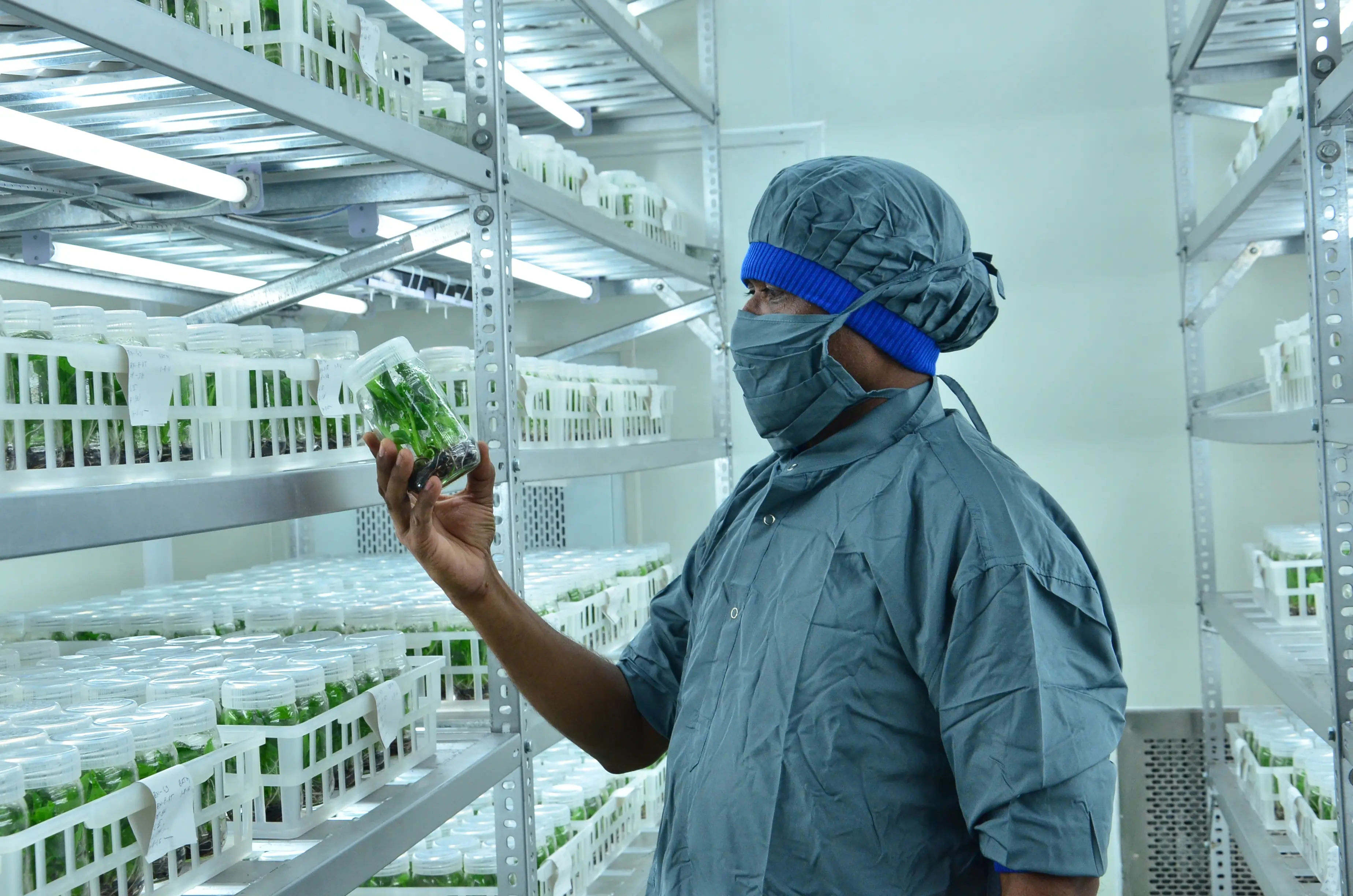
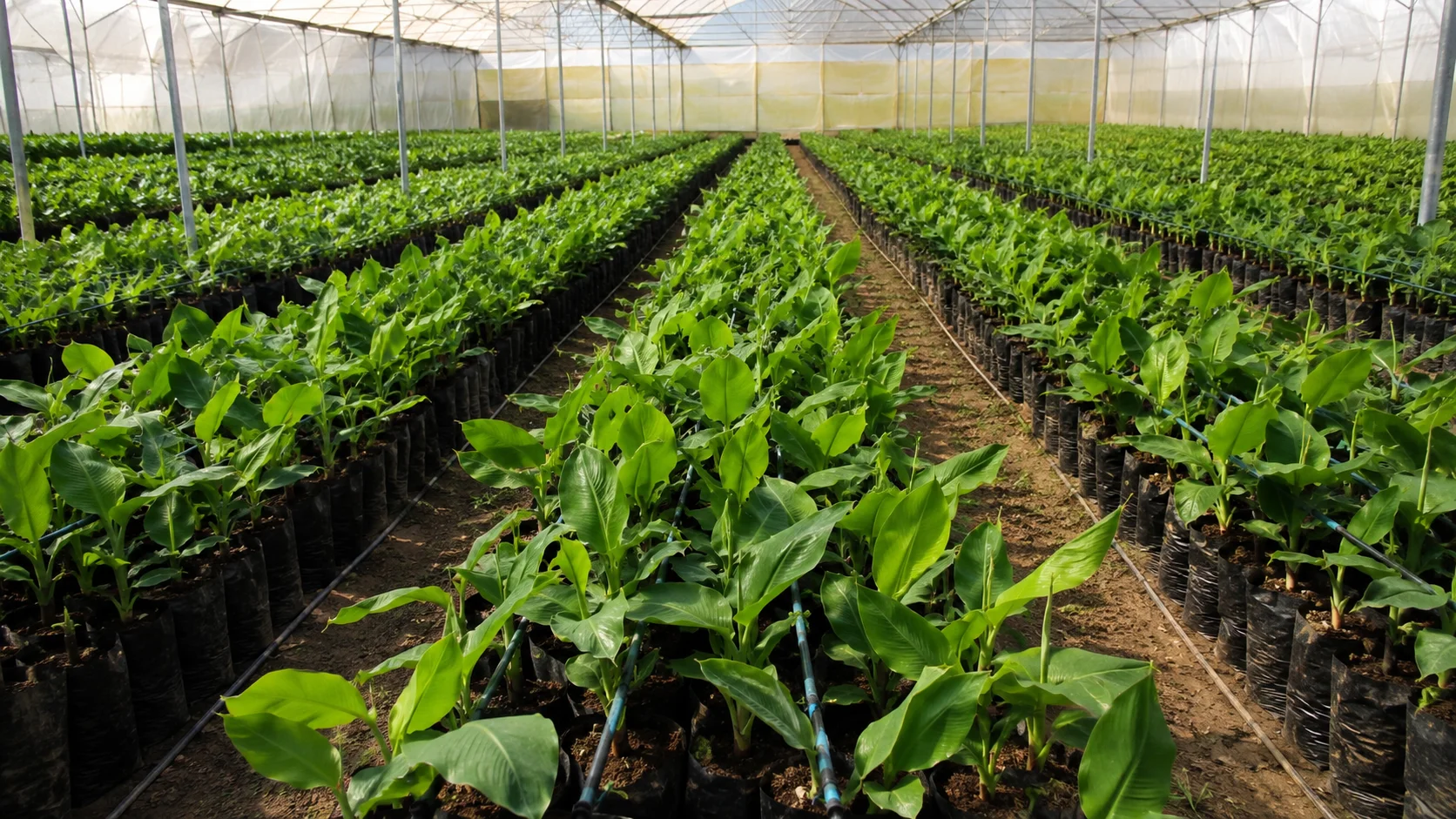
Brain-gain farmers need infrastructure that matches their speed of learning. The Farmkart platform was built specifically for this cohort — certified agri-inputs at transparent prices, integrated agronomy support, and equipment rental through rent4farm, all accessible from a smartphone. For new farmers investing in irrigation, solar-powered submersible pumps eliminate the grid dependency that made agriculture unpredictable for decades. And for those entering high-value horticulture, Reva Flora's tissue culture division provides disease-free planting material that gives new farmers the yield consistency that subsistence seed selection never could.
The agritech layer doesn't just enable efficiency — it lowers the barrier to entry for someone without 30 years of farming instinct. That's what makes it so central to the brain gain story.
As with any business, for agriculture to remain a viable occupation, farmers need to find customers willing to pay a good price for their products. However, the existing farming community has limited exposure to the current trends in marketing/e-commerce. The introduction of Reliance Jio gives the assurance of internet connectivity, so what is lacking currently is the appropriate guidance on how to use available technologies. The infusion of savvy urban youngsters with the technical knowhow into the rural communities will allow farmers to utilize the latest techniques for selling their produce. Let us see an example of someone whose passion transformed and benefited an entire community.
Anirudh Prasad from Mumbai finished his Masters degree in Chemical Engineering from the University of Manchester and started working for Hindustan Dorr-Oliver. However, the bureaucratic nature of the job frustrated his efforts to contribute effectively. He quit his corporate job and moved to Kolli Hills in Tamil Nadu to help the farming community through technology. He noticed that despite the farming community growing healthy crops such as millets, they were not able to profit significantly from it. He thought deeply on bringing about a long-term and self-sustaining change in their livelihoods. So he ushered in new measures that modernised the post-harvest procedures.
He identified the health-conscious urban communities as the target market and focused his efforts to help the rural community to tailor their products to this audience. He organized computer literacy classes to help the farmers understand Accounting principles, Microsoft Word, and Excel. With their newfound skills, the farmers were able to reply to customer feedback on their email addresses. This allowed them to rectify the packaging of contents to make it visually appealing. Due to his perseverance, millets from this particular rural community are now available in a number of high-end organic stores in Southern India.
The above examples highlight how the entry of new-age agriculturists is bringing about a fundamental shift in rural community practices. They are not only following their passion by giving up the uber-cool urban lifestyle but also infusing vibrancy to the rural communities. They bring with them fresh ideas and ways of thinking that helps the rural community to grow and prosper. The new-age farmers are also willing to try new ideas through extensive research. They share insights with the rest of the community in the hope of a better shared future.
Brain Gain vs Brain Drain: Where Indian Agriculture Stands Now
The numbers are still asymmetric. For every educated professional who returns to farming, many more continue to leave. India's agricultural workforce is shrinking as a share of GDP even as absolute numbers remain large. Brain gain is a counter-current, not yet a reversal.
But counter-currents matter. The cohort returning to farms is disproportionately high-visibility — they write about it, build agritech startups, form FPOs that serve hundreds of other farmers. Their impact scales beyond their acreage. One agripreneur who demonstrates that 3 acres can generate ₹8–10 lakh annually through smart diversification changes the calculus for twenty neighbouring families who were watching.
That's how agricultural revolutions actually happen — not through policy alone, but through demonstration effects that spread faster than any scheme. Brain gain is India's best bet for that kind of ground-up change.
In the coming years, we will be seeing more and more urban people moving from their well-paid jobs and taking up a career in rural areas. This will allow better investments in farming technologies and usher in a new era where agriculture is seen as a viable career option.